
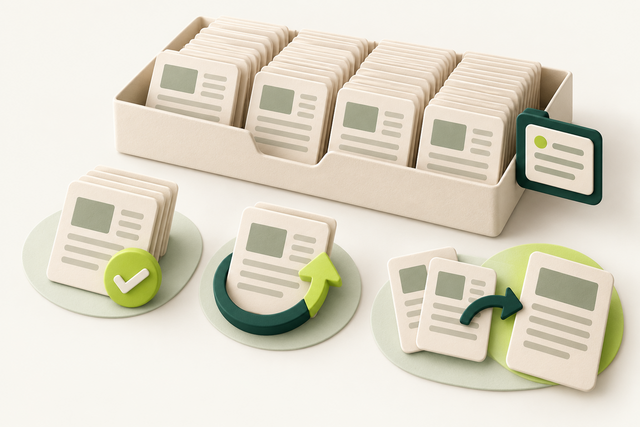
Choose the library and decision the audit should support
Keep the audit focused on useful decisions.
Use this for: The selected draft or published page being reviewed.
In an audit worksheet, name the content area, goal and review period. Include the page types needed to answer the goal. A blog refresh audit may cover articles; a website content audit may include service, product and help pages. If you sample a large site, state the sample and review important exceptions rather than presenting it as a complete inventory.
Illustrative example: An audit of outdated buying advice includes current guides and their supporting category pages, while a separate legal review owns policy retention.
- Choose the audit goal.
- Define included page types and exclusions.
- Identify retention or approval constraints.
More help and optional notes
Before you begin: The selected content and permission to edit it.
If it fails: Define the scope and identify protected or separately owned content.
Retest: Check that the selected pages can answer the audit question.
Not applicable: The stated content or feature is absent and is not needed for this page’s purpose.
Optional: scope, exclusions and approval owner. Keep confidential data out of shared exports.
Changing this result updates your checkmark and progress immediately. Notes are optional.